A water bill that jumps suddenly — with no change in your household’s habits — almost always means water is escaping somewhere it shouldn’t. The most common culprit is a silently running toilet, which can waste 200 to 4,000 gallons per day without making a sound. Hidden pipe leaks, a stuck irrigation valve, a seeping water heater, or a misread meter round out the usual suspects. This guide walks you through each cause in order of likelihood, shows you the exact DIY checks (including the 10-minute meter test), and tells you when it’s time to call a plumber in Greensboro, NC.
What Is the Most Common Cause of a Suddenly High Water Bill?
A running toilet is the number-one cause of an unexplained spike in your water bill, responsible for more surprise bills than every other cause combined. A toilet with a worn flapper or faulty fill valve can leak 200 gallons a day — or in severe cases several thousand — straight down the drain, silently, 24 hours a day. Because the water never pools on the floor, most homeowners have no idea it’s happening until the bill arrives.
Toilet flappers are rubber seals that degrade over time, especially in areas with hard water like Greensboro, where mineral deposits accelerate wear. The fill valve, float, and chain are all failure points too. The good news: a running toilet is also the cheapest problem on this list to confirm and fix, which is why it should always be your first check.
How Can a Toilet Waste Water Without You Noticing?
A toilet wastes water silently when its flapper doesn’t seal fully or its fill valve sticks open, letting water flow continuously from the tank into the bowl and down the drain. You won’t hear it in most cases — the flow is too small to be audible over normal household noise, yet it adds up to hundreds of gallons daily. This “silent leak” is the classic reason bills double with no visible puddle anywhere.
The definitive home test takes five minutes and costs nothing:
- Remove the toilet tank lid.
- Add 10 drops of food coloring (or a dye tablet) to the tank water.
- Wait 20 minutes without flushing.
- Check the bowl — if color appears, the flapper is leaking.
A replacement flapper costs under $10 at any hardware store and takes 15 minutes to install. If the dye test is negative but you still hear periodic refilling (“phantom flushing”), the fill valve is the likely culprit. Either way, if you’re not comfortable working inside the tank, a licensed plumber can diagnose and fix it in a single visit.
Could a Hidden Pipe Leak Be Raising My Water Bill?
Yes — hidden leaks in supply lines, slab foundations, or underground pipes are the second most common cause of sudden bill spikes. Unlike a dripping faucet, these leaks never show themselves directly; the water disappears into soil, concrete, or wall cavities while your meter keeps spinning. A pinhole leak in a copper supply line can waste thousands of gallons per month, and a slab leak under your foundation can run for months before any surface sign appears.
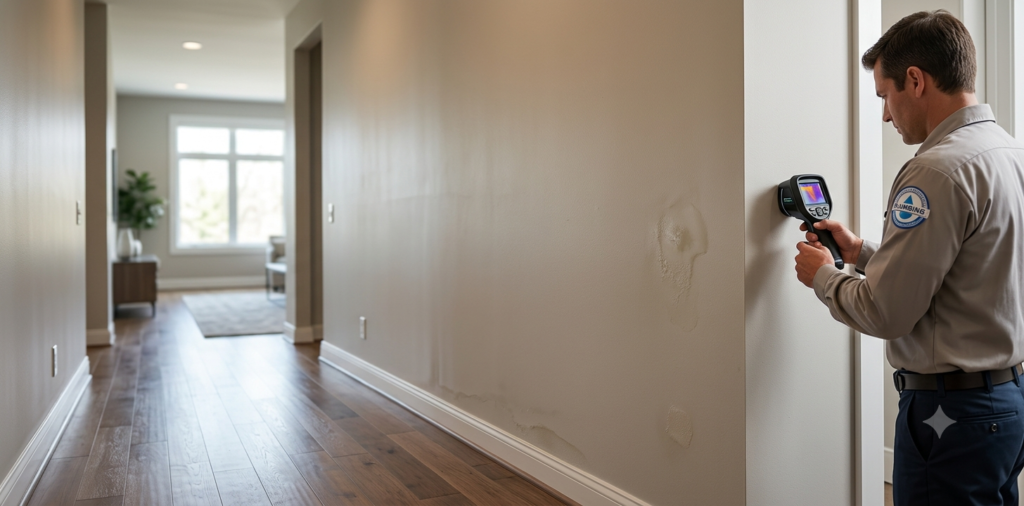
Watch for these secondary clues: the sound of running water when every fixture is off, warm spots on the floor (a hot-water slab leak), unexplained damp patches, musty odors, mold growth, or a drop in water pressure. In Greensboro, older homes in neighborhoods like Fisher Park and Irving Park with original galvanized or polybutylene piping are especially prone to hidden failures. Our leak detection specialists use acoustic sensors and thermal imaging to pinpoint these leaks without tearing open walls unnecessarily.
What Is the Water Meter Test for Hidden Leaks?
The meter test is the single most reliable DIY leak check. Turn off every water-using fixture and appliance in your home — faucets, toilets, dishwasher, washing machine, ice maker, and irrigation. Find your water meter (usually near the street or property line), note the reading, then wait 30 minutes without using any water. If the reading changes, or the small low-flow triangle/dial is spinning, water is flowing somewhere it shouldn’t be, and you have a confirmed leak.
Should I Check the Meter Before or After Looking for Visible Leaks?
Check the meter first. A meter that doesn’t move with everything off rules out hidden leaks immediately and points you toward usage changes or billing errors instead. A meter that does move tells you a leak exists before you’ve spent an hour hunting — and it gives a plumber a confirmed starting point, which saves diagnostic time and money.
Is My Irrigation or Sprinkler System the Culprit?
A malfunctioning irrigation system is one of the most overlooked causes of high water bills, especially from spring through fall. A stuck zone valve can run a sprinkler zone for hours — sometimes all night — without anyone noticing. Broken sprinkler heads, cracked lateral lines, and controllers stuck in manual mode can each add thousands of gallons to a single billing cycle.
Walk your yard and look for unusually green or soggy patches, areas where grass grows faster than the rest, or the sound of hissing near valve boxes. Check your controller’s programming — power outages can reset schedules to defaults that water far more than intended. In the Piedmont Triad’s clay soil, irrigation water pools visibly, so soggy spots are a strong tell. If a zone won’t shut off even with the controller unplugged, the valve diaphragm has failed and needs replacement.
Can a Leaking Water Heater Increase My Water Bill?
Absolutely. A water heater can leak continuously from a corroded tank, a failing temperature-and-pressure relief valve, or loose fittings — and because many units drain into a pan piped to the exterior, you may never see a puddle. The meter reads every gallon the unit loses and every gallon the cold-water inlet replaces, so a slow seep can inflate your bill for months before the tank fails outright.
Inspect around your water heater monthly: look for rust streaks, corrosion on fittings, dampness in the drain pan, or water stains on the floor. A relief valve that drips constantly (rather than occasionally) needs attention. Most traditional tank water heaters last 8–12 years; if yours is in that range and your bill is climbing, have it inspected. Our water heater repair team in Greensboro can determine whether a repair or replacement makes more sense.
Could My Water Bill Itself Be Wrong?
Sometimes the problem isn’t your plumbing — it’s the bill. Meters can be misread, estimated readings can be wildly off, billing cycles can change length, and utilities do raise rates. Before assuming a leak, compare the meter reading printed on your bill against your actual meter; a large discrepancy means the bill was estimated. Also check whether your utility recently changed its rate tiers or billing period — the City of Greensboro Water Resources department posts rate changes publicly.
Seasonal factors matter too: filling a pool, new sod, houseguests, or a teenager’s longer showers can all explain a one-month jump. Compare this bill to the same month last year, not just last month — that’s the apples-to-apples comparison. If usage is genuinely up with no explanation and the meter test confirms flow, you’re back to leak hunting.
How Much Can a Hidden Leak Cost If Ignored?
A hidden leak doesn’t just inflate your water bill — it compounds. A pinhole supply-line leak wasting 10 gallons an hour adds 7,200 gallons a month, but the water damage it causes inside a wall cavity can run into thousands of dollars in drywall, flooring, and mold remediation. Slab leaks are worse: water undermining your foundation can lead to structural repairs costing five figures. The EPA estimates the average household leak wastes nearly 10,000 gallons per year — and 10% of homes have leaks wasting 90+ gallons daily.
The math strongly favors early action. A $150–$300 professional leak detection visit that finds the problem in an hour is dramatically cheaper than six months of inflated bills plus water damage repair. If your bill jumped and the meter test is positive, treat it as urgent even if nothing looks wet — by the time you see damage, the leak has been running far longer than your bill suggests.
Does a Leak Always Get Worse Over Time?
Almost always. Water under pressure erodes whatever it touches — pipe walls thin further, soil washes away from under slabs, and wood rot spreads once moisture is present. Pinholes become streams. A valve that sticks once will stick again. The rare exception is a one-time event like a hose left running, which is why ruling out usage changes first matters.
When Should I Call a Plumber About a High Water Bill?
Call a plumber when the meter test confirms a leak you can’t locate, when you notice damp walls, warm floor spots, mold, or the sound of running water with everything off — or when the bill keeps climbing after you’ve ruled out toilets and irrigation. Hidden leaks get more expensive every day they run: water damage, mold remediation, and foundation issues dwarf the cost of early detection.
If water is actively flooding — a burst pipe, a major slab leak, sewage backup — don’t wait. Our 24/7 emergency plumbers in Greensboro respond day and night. For non-emergencies, a professional inspection with acoustic and thermal equipment finds what DIY checks can’t. Call 877 708 6986 — we’ll help you find where your water (and money) is going.
Frequently Asked Questions
How much water does a running toilet waste per day?
A running toilet wastes roughly 200 gallons per day on average, and severe cases can exceed several thousand gallons daily, according to EPA WaterSense data. That’s enough to double or triple a typical household’s monthly water bill without any visible sign of a problem.
Will a small drip really affect my water bill?
Yes. A faucet dripping once per second wastes about 3,000 gallons per year. Multiple drips, a running toilet, or a pinhole pipe leak running 24/7 can add thousands of gallons to a single billing cycle — easily noticeable on your bill.
How do I know if my water meter is accurate?
Compare the reading on your bill to the actual meter. They should be close. You can also do a bucket test: fill a 5-gallon bucket and check that the meter advances by approximately 5 gallons. If the meter runs with all water off, the issue is a leak, not meter accuracy.
Can hard water cause plumbing leaks?
Hard water doesn’t directly cause leaks, but mineral buildup accelerates wear on toilet flappers, fill valves, faucet cartridges, and water heater tanks — all of which can then leak. Greensboro’s moderately hard water makes regular fixture maintenance especially worthwhile. Learn more from the EPA’s WaterSense program about efficient fixtures.
Does homeowners insurance cover water damage from leaks?
Most policies cover sudden, accidental water damage (like a burst pipe) but exclude damage from long-term leaks deemed a maintenance issue. This is another reason to investigate a high bill promptly — documenting a quick response helps if you ever file a claim. Check your specific policy for details.
The bottom line: a suddenly high water bill is your plumbing system’s way of asking for attention. Start with the five-minute toilet dye test, run the 30-minute meter check, walk your irrigation zones, and glance at your water heater. Most causes are cheap to confirm and fix early — but expensive to ignore. If the meter keeps moving and you can’t find the source, call 877 708 6986 — Plumbers of Greensboro will track it down fast, with upfront pricing before any work begins.