A foul odor rising from your sink, shower, or bathtub drain is one of the most unpleasant plumbing problems a homeowner can face. If you have ever asked yourself, “why does my drain smell?” you are not alone. Drain odors are a common complaint in Greensboro, NC homes, and the good news is that most causes are easy to diagnose. This guide explains exactly what creates drain smells, how to tell where the odor is coming from, and when it is time to call a professional plumber.
Why Does My Drain Smell Like Rotten Eggs?
A rotten egg smell coming from a drain is almost always caused by hydrogen sulfide gas, which forms when bacteria break down organic waste inside your pipes. Hair, soap scum, grease, and food particles collect along pipe walls and inside the P-trap, creating a slimy layer called biofilm. Anaerobic bacteria feed on this material and release hydrogen sulfide as a byproduct, producing the unmistakable sulfur or rotten egg odor that rises through the drain opening.
In Greensboro homes, this problem is especially common in guest bathrooms and kitchen sinks that see heavy use. The Piedmont region’s moderately hard water can accelerate mineral and soap buildup inside pipes, giving bacteria even more surface area to colonize. If the smell is strongest when water is running and fades afterward, biofilm in the drain line is the most likely culprit.
What Causes Drain Odors in the Kitchen Sink?
Kitchen drain smells are usually driven by food waste, fats, oils, and grease — often called FOG in the plumbing industry. Food particles get trapped on the underside of the garbage disposal splash guard, on grinding blades, and along the walls of the drain pipe. As these particles decompose, they produce sour, rotten odors that worsen over time.
Grease is the biggest offender. When hot grease goes down the drain, it cools and solidifies inside the pipe, trapping food debris and creating a rancid layer that bacteria thrive on. Even if you run the garbage disposal regularly, the drain line beyond the disposal can accumulate months of buildup. If your kitchen drain smells, the fix usually starts with a thorough cleaning of the disposal and drain line — our drain cleaning services in Greensboro remove this buildup completely.
What Causes Drain Odors in the Bathroom?
Bathroom drain odors come from a different “diet” than kitchen drains. The main culprits are hair, skin cells, soap scum, and toothpaste residue. These materials bind together inside the drain to form a thick mat, which becomes a breeding ground for biofilm and the bacteria that produce sulfur smells.
Shower and bathtub drains are particularly prone to this because hair washes down with every shower. Over weeks and months, the accumulation restricts water flow and creates the perfect anaerobic environment for odor-causing bacteria. A drain that smells musty or mildew-like in the bathroom almost always points to this kind of organic buildup rather than a sewer problem.
Can a Dry P-Trap Cause Drain Smells?
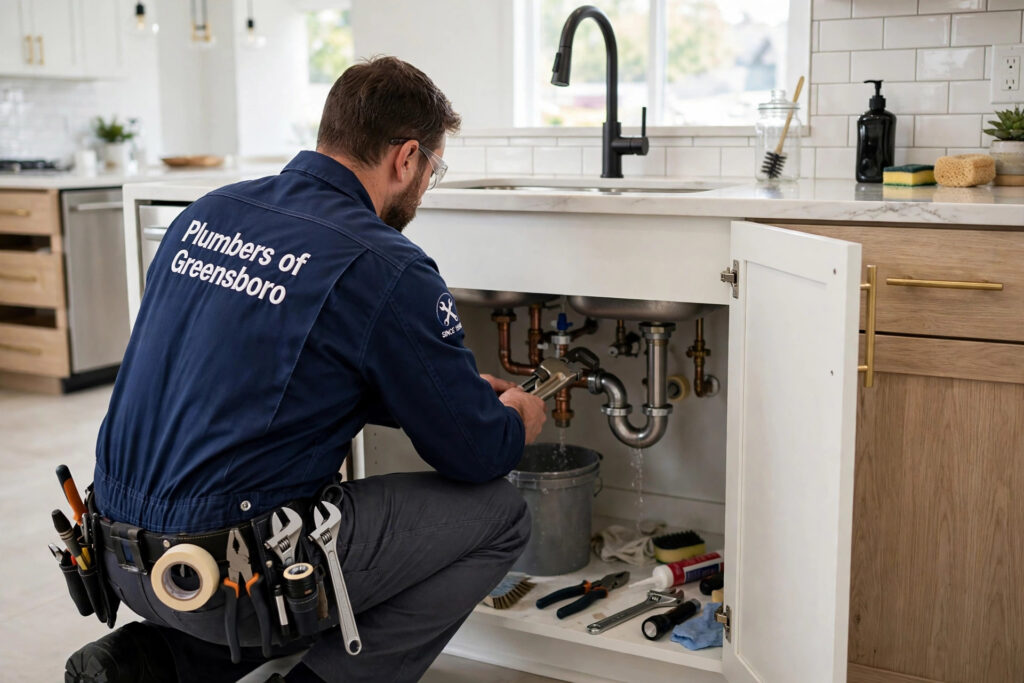
Yes — a dry P-trap is one of the most common and simplest causes of drain odors. Every drain has a U-shaped section of pipe called a P-trap that holds a small amount of water. This water acts as a seal, blocking sewer gases from traveling back up into your home.
When a fixture is not used frequently — such as a guest bathroom sink, a basement floor drain, or a laundry room drain — the water in the trap evaporates over time. Once the seal is gone, sewer gas flows freely into the room. The fix is remarkably simple: run water down the drain for 30 to 60 seconds to refill the trap. If the smell disappears, you found your answer. For floor drains that rarely see water, pouring a cup of mineral oil after refilling the trap slows future evaporation.
Why Does Only My Hot Water Smell Like Rotten Eggs?
If the rotten egg smell appears only when you run hot water, the problem is almost certainly in your water heater, not your drains. Water heaters contain a magnesium anode rod that protects the tank from corrosion. In areas with certain mineral content in the water supply, this rod can react with naturally occurring sulfates to produce hydrogen sulfide gas.
You can confirm this with a simple test: fill a glass with cold water and another with hot water, then smell each away from the sink. If only the hot water smells, the anode rod is the source. A licensed plumber can replace the magnesium rod with a zinc-aluminum alternative that does not produce the reaction. Our water heater services in Greensboro include anode rod inspection and replacement.
How Do You Get Rid of Drain Smells Yourself?
For mild drain odors caused by surface buildup, several DIY methods can help. Start with the simplest: pour half a cup of baking soda down the drain, followed by half a cup of white vinegar. The foaming reaction loosens biofilm and debris from pipe walls. Let it sit for 15 minutes, then flush with a kettle of boiling water.
For tougher buildup, use a flexible drain brush or a drain snake to physically scrub the inside of the pipe — this removes the biofilm that chemical cleaners cannot reach. In kitchen sinks with a garbage disposal, freeze vinegar in ice cube trays and run the cubes through the disposal to scour the grinding chamber. Avoid pouring bleach down drains as a first resort; it can damage older pipes and does not remove the underlying buildup. If odors persist after two rounds of cleaning, the problem is deeper in the line and needs professional drain cleaning.
When Should You Call a Plumber for Drain Odors?
Call a plumber when drain smells persist after cleaning, affect multiple fixtures at once, or come with other symptoms. Odors from every drain in the house combined with slow drainage or gurgling sounds can signal a blocked plumbing vent or a problem in the main sewer line — both of which require professional diagnosis.
A blocked vent stack on the roof prevents sewer gases from escaping safely outside, forcing them back through your drains instead. Sewer line damage — from tree root intrusion, which is common in Greensboro’s older neighborhoods with mature oaks, or from shifting Piedmont clay soil — can also push gases backward through the system. These are not DIY fixes. If you notice sewage odors paired with backups or wet spots in the yard, call 877 708 6986 right away — sewer gas contains methane and hydrogen sulfide at concentrations that should not be ignored.
How Can You Prevent Drain Odors in the Future?
Preventing drain smells is far easier than eliminating them once bacteria take hold. The single most effective habit is running water through every drain regularly. In guest bathrooms or utility sinks that sit unused for weeks, run the faucet for 30 seconds once a week to keep P-traps full and prevent the water seal from evaporating.
In the kitchen, never pour cooking grease down the drain — wipe pans with a paper towel first and dispose of cooled grease in the trash. Install a mesh strainer over the drain to catch food particles before they enter the pipe, and run cold water for 15 seconds after using the garbage disposal to flush debris fully through the line. These small habits prevent the FOG buildup that causes most kitchen drain odors.
In bathrooms, a hair catcher over the shower and tub drain is the cheapest odor prevention you can buy. Clean it weekly. Once a month, flush every drain in the house with the baking soda and vinegar treatment followed by boiling water — this takes ten minutes and keeps biofilm from establishing itself. For Greensboro homes with hard water, consider having your drains professionally cleaned once a year, since mineral deposits give bacteria more surface to grip.
Finally, pay attention to your plumbing vents. The vent stack on your roof allows sewer gases to escape safely above your home instead of backing up through drains. If you notice odors from multiple fixtures at once, especially after heavy rain or wind, a blocked vent could be the cause — leaves, nests, or ice can obstruct it. Vent clearing is a quick job for a professional but difficult to do safely yourself.
Frequently Asked Questions
Is a smelly drain dangerous?
Most drain odors from biofilm are unpleasant but not dangerous. However, persistent sewer gas odors can indicate a dry trap, blocked vent, or sewer line problem. Sewer gas contains methane and hydrogen sulfide, so strong or widespread odors should be evaluated by a plumber rather than ignored.
Why does my bathroom sink smell even after cleaning?
The overflow hole and the underside of the drain stopper are common hiding spots for biofilm that surface cleaning misses. Scrub the overflow channel with a small brush and remove the stopper to clean underneath it. If the smell remains, buildup deeper in the drain line may need professional cleaning.
Can I use chemical drain cleaner to fix drain smells?
Chemical drain cleaners can temporarily mask odors but rarely remove the biofilm causing them. They can also damage older metal pipes and septic systems. Mechanical cleaning with a brush or snake, or professional hydro jetting, addresses the root cause instead of the symptom.
How often should drains be cleaned to prevent odors?
For most Greensboro homes, a monthly baking soda and vinegar flush plus an annual professional drain cleaning keeps odors away. Homes with garbage disposals, long hair in the household, or hard water may benefit from professional cleaning every six months.
Does homeowners insurance cover drain odor problems?
Standard homeowners insurance typically does not cover maintenance issues like drain odors or buildup. However, if odors stem from sudden sewer line damage, some policies cover the resulting repairs. Check your specific policy or ask your insurer about sewer line endorsements.
Keep Your Drains Fresh in Greensboro, NC
Most drain smells come down to three things: biofilm buildup, dry P-traps, or water heater bacteria — and the first two are easy to address once you know what to look for. Start with the simple fixes: refill dry traps, scrub away biofilm, and test whether the odor is in your hot water only. When odors persist, spread to multiple drains, or come with slow drainage, it is time for professional help.
Plumbers of Greensboro provides thorough drain cleaning, leak detection, and full plumbing services throughout Greensboro, NC. For drain odors that will not go away — or any plumbing emergency — call 877 708 6986. We answer 24/7.